
Tina Lang · 6 November 2026
Polish Campus Collectives Update Training Protocols to Support Cross-Border Event Coordination and Resource Exchanges
Student collectives across Polish universities have begun implementing revised training protocols that emphasize skills in cross-border event planning along with shared resource management, and these changes build on recent adjustments in educational frameworks that took effect during the 2025 academic year. Observers note that the adaptations align with broader European efforts to encourage mobility among higher education groups, which data from regional reports indicate has increased participation in joint projects by approximately 18 percent over the past two years.
Reforms Target Practical Skills for International Coordination
Training reforms now incorporate modules on digital collaboration tools, budget allocation across multiple countries, and regulatory compliance for events that span national boundaries, whereas earlier programs focused primarily on local logistics. Researchers at institutions in Kraków and Wrocław have documented how these updates allow collectives to coordinate workshops that draw participants from Germany, Czechia, and Lithuania, with sessions scheduled to culminate in a major gathering planned for November 2026. Figures from university administrative records show that resource sharing agreements have expanded to cover equipment loans and joint venue bookings, which reduce individual group expenses by an average of 25 percent according to internal audits.
Those who've studied these developments point out that the protocols include case examples drawn from prior inter-regional festivals, and collectives apply lessons on conflict resolution during virtual planning meetings held biweekly. Data indicates that groups adopting the new curriculum report higher success rates in securing external grants, particularly when proposals highlight sustainable practices and inclusive participation metrics.
Cross-Border Partnerships Expand Through Structured Resource Sharing
Campus groups in Poznań and Gdańsk have formed alliances with counterparts in neighboring countries, and these connections facilitate the exchange of specialized equipment such as projection systems and sound gear that might otherwise remain underutilized at single locations. A study conducted by the European University Association reveals that such arrangements have led to 32 documented events in 2025 alone, wth themes ranging from environmental sustainability forums to technology innovation showcases. Participants coordinate via shared online platforms that track availability and transport logistics, which streamlines processes that previously required months of separate negotiations.
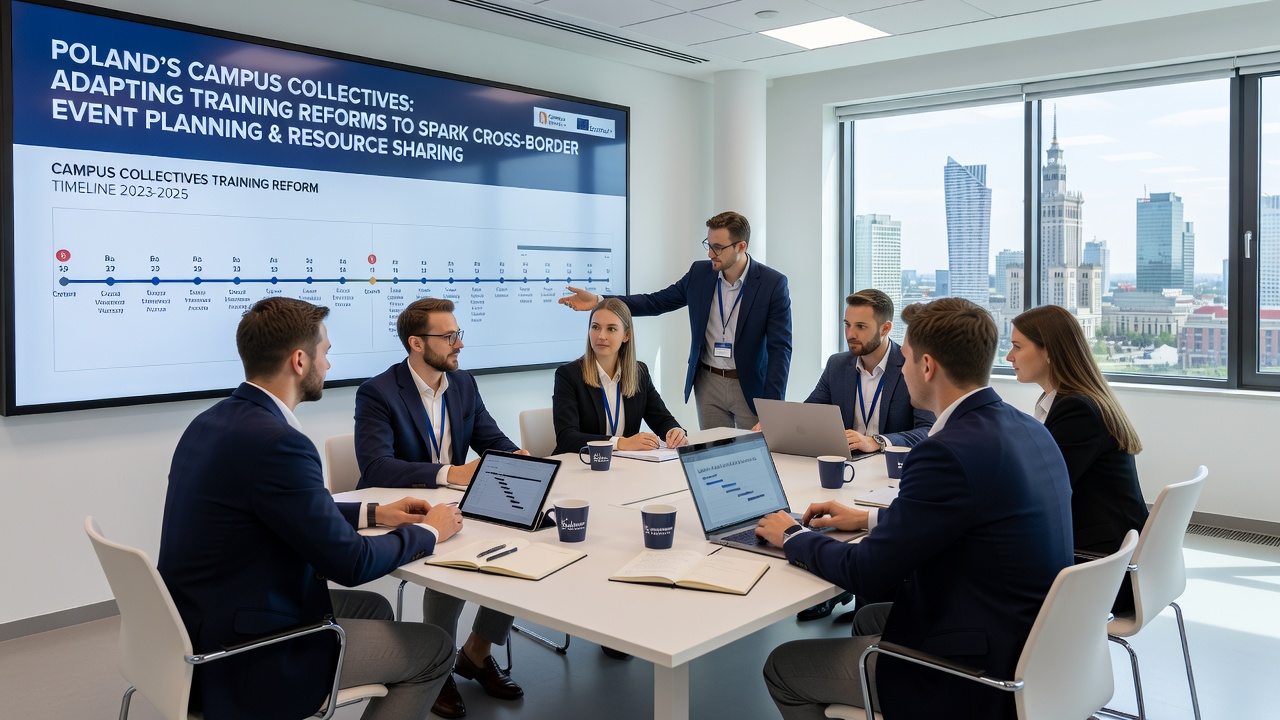
What's notable is how the reforms integrate language support and cultural awareness components into the core training, since many collectives now host mixed-language sessions that prepare organizers for diverse audiences. Evidence from participant surveys conducted at six Polish universities shows improved confidence levels in managing international timelines and visa requirements, with completion rates for certification modules reaching 87 percent among active members. And these outcomes align with findings from an OECD education report that links targeted skill development to stronger transnational networks in higher education settings.
November 2026 Events Highlight Ongoing Adaptations
Preparations for the November 2026 cross-border summit illustrate how collectives apply the updated training in real time, as teams from multiple nations divide tasks ranging from content curation to on-site coordination using jointly maintained databases. Government data from Poland's Ministry of Education and Science indicates that funding reallocations have supported these initiatives through dedicated grants totaling 1.2 million euros for the current cycle, which encourages further experimentation with hybrid formats. Observers note that collectives in smaller cities benefit particularly from access to shared digital archives that contain templates for event proposals and risk assessments developed by larger partner groups.
Training sessions now routinely simulate scenarios involving currency fluctuations and differing safety standards, which prepares organizers for the practical challenges of multinational projects. Research published by academic consortia in the region documents how these simulations correlate with fewer last-minute adjustments during actual events, and similar patterns appear in records from comparable programs operating in Scandinavia and the Baltic states.
Conclusion
Polish campus collectives continue to refine their approaches based on feedback from completed projects, and the emphasis on training reforms supports sustained growth in cross-border activities. Available records confirm that resource sharing mechanisms have become integral to operational strategies, while event planning capabilities expand through consistent application of the new protocols. Data from ongoing evaluations will likely inform further adjustments as collectives prepare for the November 2026 activities and beyond.