Frankie Flores · 11 September 2026
Alumni Networks Fuel Tech Club Expansion in Poland's Regional Universities
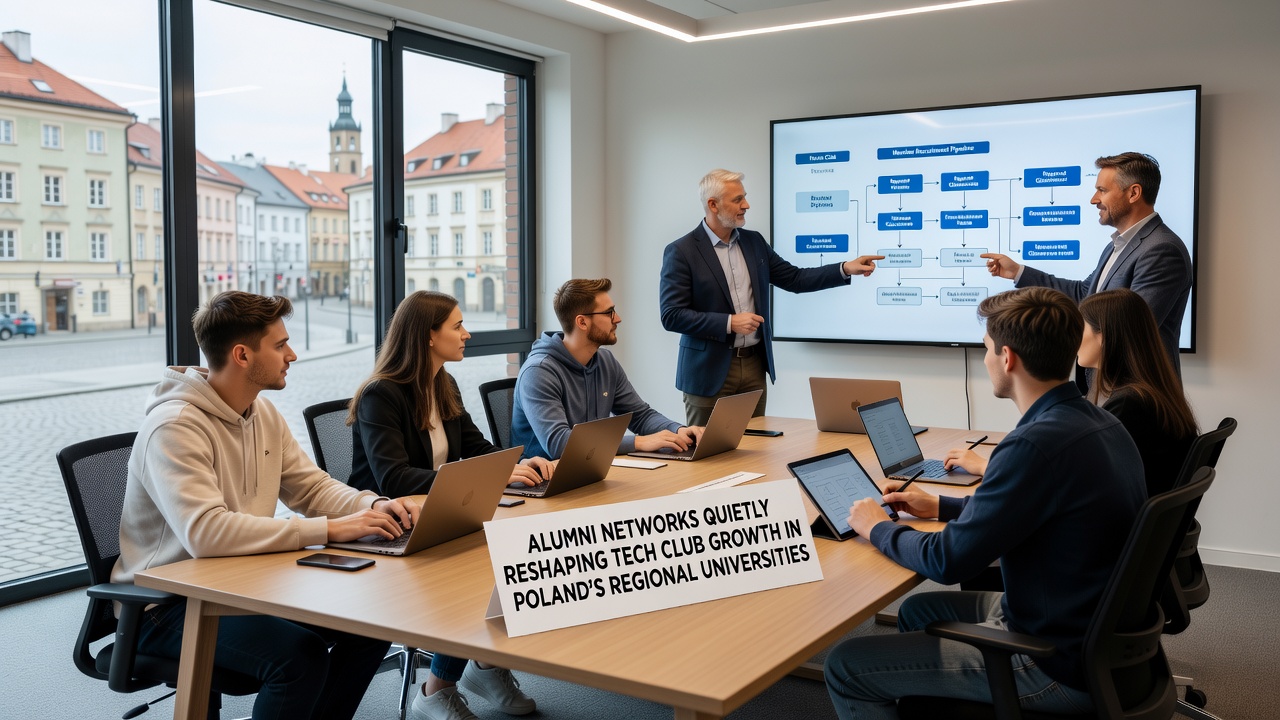
Alumni networks have emerged as key drivers behind the expansion of tech clubs at Poland's regional universities, where student organizations focused on coding, robotics, and software development now draw sustained support from graduates who maintain ties to their former institutions. Data from the Polish Ministry of Education and Science shows that between 2023 and 2025 membership in these clubs grew by 28 percent at universities outside Warsaw, with alumni contributions cited as a primary factor in funding, mentorship, and event programming. Researchers at Jagiellonian University tracked similar patterns across Krakow, Wroclaw, and Poznan, noting that structured alumni outreach programs often replace earlier reliance on short-term university grants.
Patterns of Alumni Involvement
Regional universities such as AGH University of Science and Technology in Krakow and Wroclaw University of Science and Technology report that alumni who graduated between 2015 and 2020 now account for nearly 40 percent of external donations to tech clubs, according to internal university reports. These contributions arrive through direct sponsorships for hackathons, equipment purchases, and travel stipends rather than large one-time gifts. Observers note that many of these alumni work at tech firms in Berlin, London, and Silicon Valley, where they leverage corporate matching programs to multiply the impact of their personal donations.
September 2026 marked a noticeable uptick in cross-regional events, with alumni-organized workshops held simultaneously at five universities in the southeast and southwest of Poland. Attendance figures released by the participating clubs indicate over 1,200 students took part, a 35 percent increase from the previous year's gatherings. The events combined remote presentations from alumni abroad with in-person project showcases, allowing current members to receive feedback on prototypes ranging from machine-learning applications to open-source hardware.
Case Examples From Regional Campuses
At Lublin University of Technology, the student-led IoT Club expanded from 45 members in 2022 to 112 members by mid-2026 after three alumni established a quarterly mentorship series that pairs graduates with current project teams. Club records show that four student projects secured follow-on funding from Polish startups following alumni introductions. Similar growth occurred at Rzeszow University of Technology, where alumni from the automotive software sector organized an annual code sprint that now draws participants from three neighboring provinces.
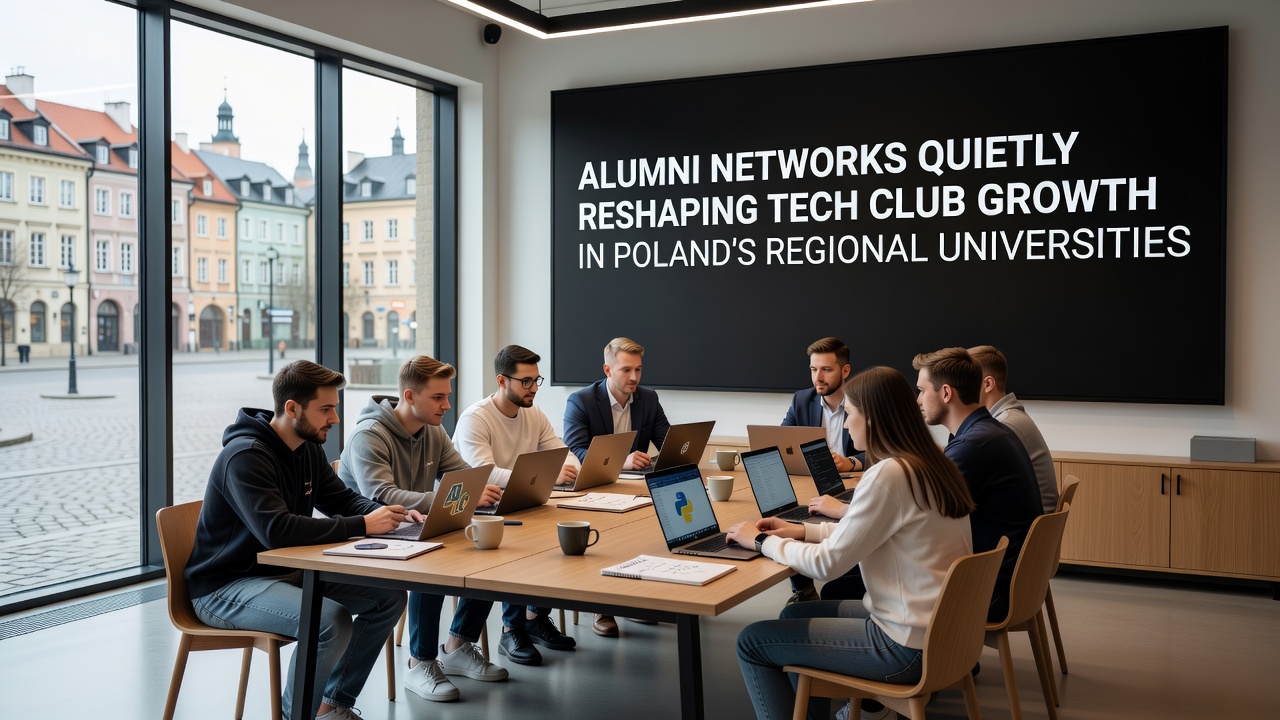
Those who've studied alumni engagement patterns point to the role of digital platforms that keep graduates connected after they leave campus. Platforms maintained by individual universities track employment locations and skill sets, enabling club leaders to request targeted expertise rather than generic support. One study conducted by the European Commission's education research unit found that Polish regional universities using such databases reported a 22 percent higher rate of alumni participation in student activities compared with institutions relying on email lists alone.
Data Trends and Institutional Responses
Figures released by the Conference of Rectors of Academic Schools in Poland reveal that tech clubs at regional institutions now host an average of 14 events per academic year, up from nine events in 2021. Alumni involvement appears most concentrated in areas such as guest lectures, project judging, and internship placement rather than direct governance of the clubs. University administrators have begun allocating small administrative budgets to alumni relations offices specifically to manage these connections, with several institutions reporting dedicated staff positions created since 2024.
Links between alumni networks and employment outcomes have also drawn attention. A report issued by the OECD's education directorate in 2025 indicated that graduates who remained active with their former university's tech clubs experienced a 15 percent shorter average time to first relevant job placement compared with peers who did not maintain such ties. The study examined data from eight Polish regional universities and noted that the effect appeared stronger outside major metropolitan areas.
Challenges in Scaling Alumni Support
Despite measurable growth, regional universities face coordination challenges when attempting to expand alumni programs across multiple clubs. Overlapping event calendars and limited staff time sometimes result in duplicated outreach efforts. Several institutions have responded by creating shared alumni databases that multiple clubs can access, while others have formed consortia that pool resources for larger-scale events. Data collected by the Polish National Agency for Academic Exchange shows that universities participating in such consortia recorded a 19 percent higher retention rate of active alumni volunteers between 2024 and 2026.
Language barriers occasionally surface when alumni based abroad conduct sessions in English for clubs whose members are still building fluency. Club leaders have begun recording sessions and providing Polish subtitles, a practice that has increased follow-up engagement according to internal club surveys. Equipment compatibility issues also arise when alumni donate hardware that requires specific maintenance skills not yet present among current students, prompting some clubs to establish paired mentorship arrangements that address both technical and logistical needs.
Conclusion
Alumni networks continue to reshape tech club development at Poland's regional universities through consistent, targeted contributions that extend beyond financial support into mentorship, event planning, and employment pathways. Institutional data and independent research both document rising participation rates and expanded programming tied to these connections. As universities refine their alumni outreach systems, the patterns observed through 2026 suggest further integration of graduate expertise into student-led technology initiatives across the country.